An Aphid Attack
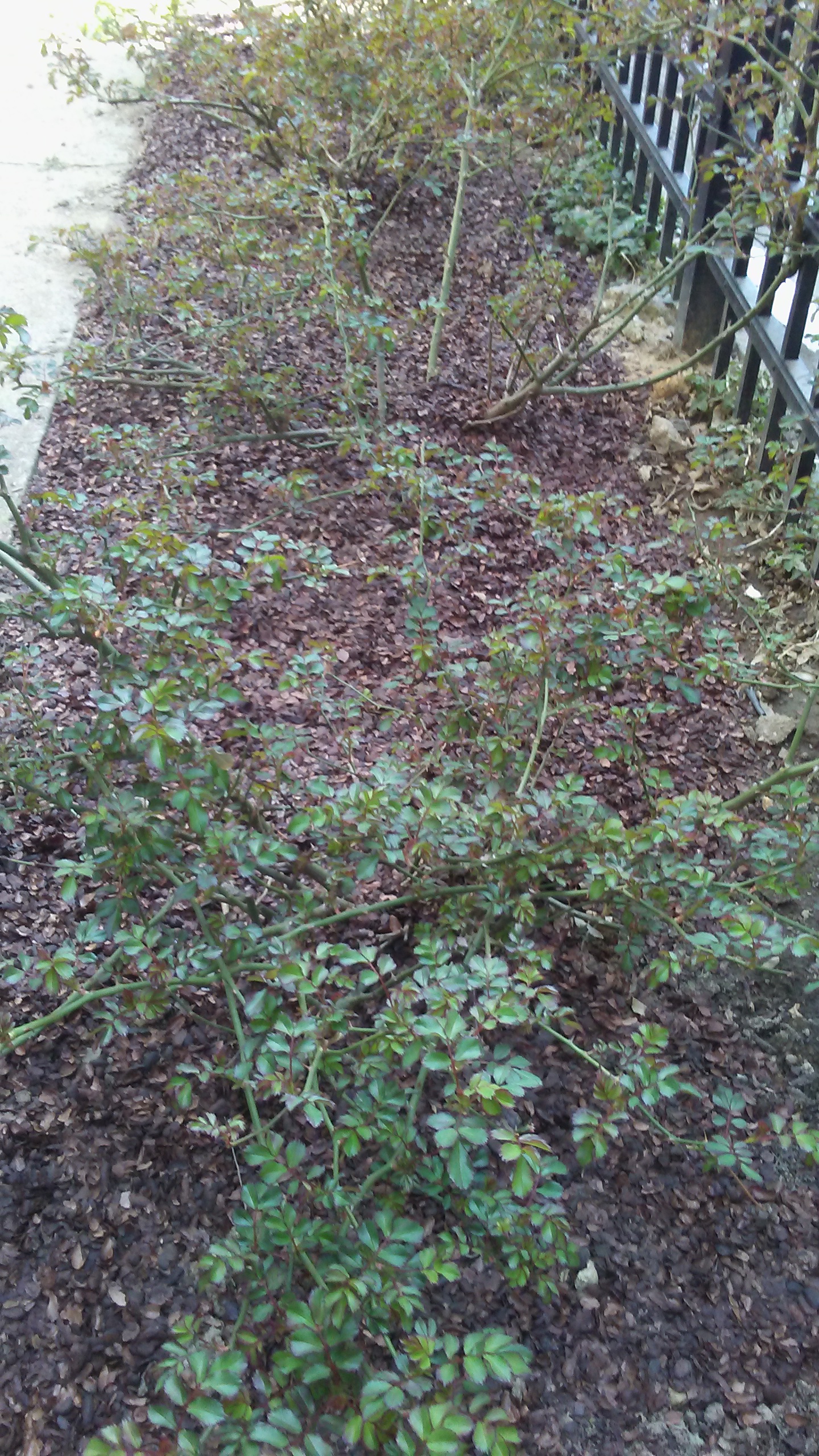
Spring, in all its glory, has a marvelous way of resurrecting my spirit. A spirit that seemingly had lost all hope in the blustery cold winter months. The hints of life burgeoning in my garden stirs renewed hope and energy within my aching bones. How exciting to see new canes sprawling out as if stretching from an oppressing winter! The new red leaves bursting in color declare, “I’m alive just waiting to bestow glorious blooms!”
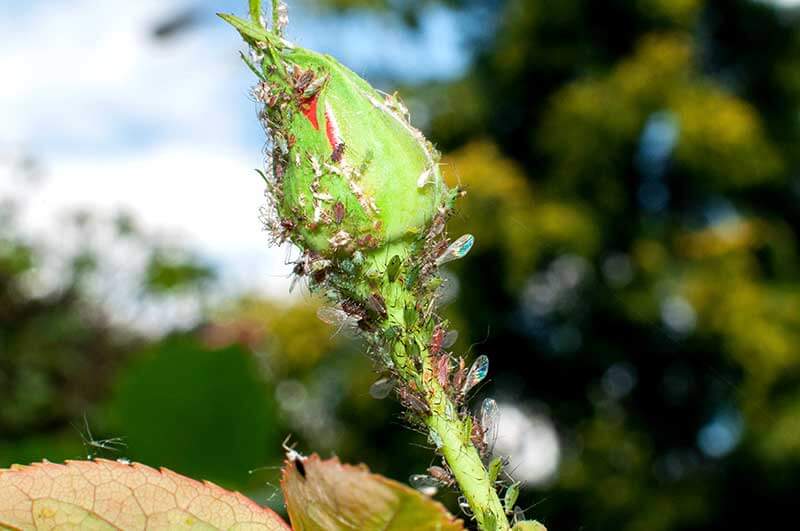
Irritatingly deceptive are the tiny green aphids that blend in perfectly as they cover an unsuspecting rose bud and other areas of the plant. Technically, aphids may appear in your garden as an assortment of colors such as black, brown, red, or even white. Aphids attack worldwide and their different species are in the thousands! Aphids arrive in the Spring, but can reemerge anytime during rose season seeking out the sap within your rose plant. They tend to cover the rose bud or hide under the plant’s foliage. Aphids can even transmit disease to your other roses. Thus far, every Spring when I look closely at my buds anxious for them to bloom, I am horrified to see a cluster of life sucking creatures curling the leaves around her, smothering her, and doing their best to prevent her from blooming!
Thankfully, there are a few ways to resolve an aphid attack. One such option is to remove them by picking them off and squishing them although this method is quite tedious considering how many aphids typically plague a rose bush at any given time. Another much faster option would be to take a hose with a nozzle and blast off the aphids. This method won’t damage your roses and provides a quick, but temporary solution. Perhaps the best option is to develop an inviting host environment as previously discussed. Various herbs like dill, parsley, and mustard and flowers such as butterfly weed, tansy, Queen Anne’s lace and golden rod will attract ladybugs. Ladybugs thoroughly enjoy a tasty aphid and can devour the colony of pests in no time. You could also purchase ladybugs through an online source and release them into your garden. Follow the directions if you choose this option and understand most of the ladybugs will fly off but some will stay and enjoy the aphid buffet. Considering how aphids will seek out to destroy your burgeoning buds every Spring and into the Summer months, wisdom says to start establishing a welcoming host environment for the good bugs to permanently move in.

“And now, behold, the cry of the children of Israel is come unto Me; moreover, I have seen the oppression wherewith the Egyptians oppress them.” Exodus 3:9
An aphid attack on glorious roses reminds me of the affliction of the people of Israel, also known as the ancient Israelites and today known as the Jewish people. It seems quite unfair to notice and delight in a flourishing bud, such as God’s chosen people, only to have them smothered by pest likened to antisemitism!
Nevertheless, the Hebrew Bible repeatedly both warns and encourages the Israelites, whether natural born or grafted-in such as Caleb (Numbers 13:6, 14:24, Joshua 14:13-14/Genesis 15:19) and Ruth (Ruth 1:2,8-18), both grafted-in Jews, for example, to not fret and to even expect affliction, but in the end, God will literally save the Jewish people, collective Israel scattered throughout the world raising them to be victorious (see Isaiah 30, 41-42, 49, 53-56, 60; Ezekiel 34-37; Joel 3; Zephaniah 3; Zechariah 8-12 as a few examples).

“Even though you planned evil against me, Elohim (God) planned good to come out of it.” Genesis 50:20
Furthermore, suppose the oppressed rose bud was crying out to you, the master gardener, to rescue her from such bondage. She was unable to free herself of the smothering aphids but her gardener could. What if we learned to cry out to God, our Master Gardener, rather than try to fight off the aphids ourselves or worse, choose helplessness and hopelessness by giving in to slavery, depression, or fear. Surely, He hears our cries (see Exodus 2:23 and 3:9). Sometimes though, for the greater good and for the bigger picture that we cannot comprehend, it may feel like God, our Abba Father, has abandoned us so we cry out like the Israelites did, which David penned about them stating, “My God! My God! Why have you forsaken me?” (see Psalm 22:1). But ultimately, they were rescued from the oppression of Egypt. We see from the Psalm in verse 5, “To you they cried and were rescued; in you they trusted and were not put to shame.” David also encourages Israel and future readers, to understand the blessings coming to those who trust in the LORD when he scribes, “He trusts in the Lord; let him deliver him; let him rescue him, for he delights in him!” David further encourages the often oppressed and afflicted Israel while prophesizing about future world stating,
“You who fear the Lord, praise Him; all the seed of Jacob, honor Him, and fear Him, all the seed of Israel. For He has neither despised nor abhorred the cry of the poor, neither has He hidden His countenance from him; and when he cried out to Him, He hearkened. The humble shall eat and be sated; they shall praise the Lord, those who seek him; your hearts shall live forever. All the ends of the earth shall remember and return to the Lord, and all the families of the nations shall prostrate themselves before You. For the kingship is the Lord’s, and He rules over the nations..” Psalm 22:24-29
The point, beloved rosebud, is even though Israel or the Jewish people collectively and possibly those who align with them, may be heavily afflicted throughout the centuries, ultimately, God is grooming and preparing a world to come full of victorious overcomers…a world full of “ever-blooming roses”! So whether you need to tediously hand pick those aphids right off of you, blast them off in one clean swoop, develop an environment full of ministering angels, or better yet, simply cry out to your Master Gardener, then just do it! I’m here to remind you, beloveds of God: He hears you. In His strength and His time, you can overcome the attacks of pestilence!
“For his anger is but for a moment, and his favor is for a lifetime.
Weeping may tarry for the night, but joy comes with the morning.” Psalm 30:5