Blooming in my garden this holiday weekend is the ever-fragrant hybrid tea rose known as “Memorial Day”.

Memorial Day


Memorial Day
Blooming in my garden this holiday weekend is the ever-fragrant hybrid tea rose known as “Memorial Day”.
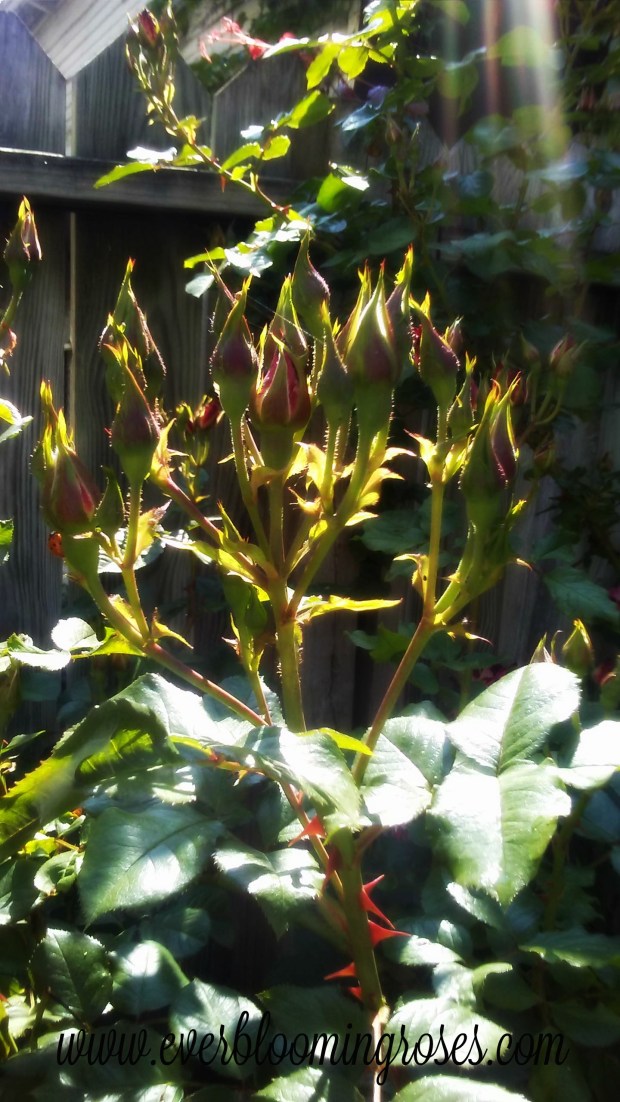
Fourth of July candelabra
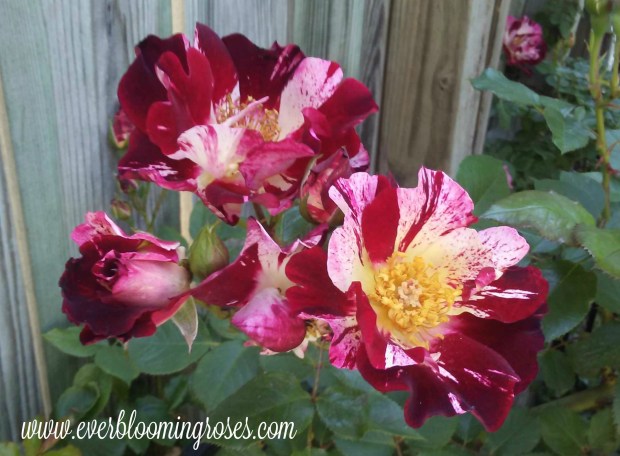
Fourth of July climbing rose
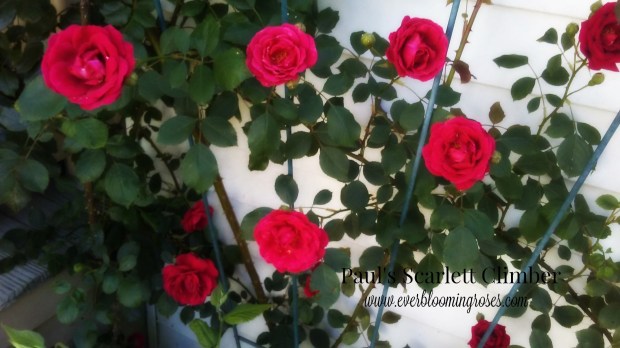
Paul’s Scarlett Climber – a once-blooming climbing rose
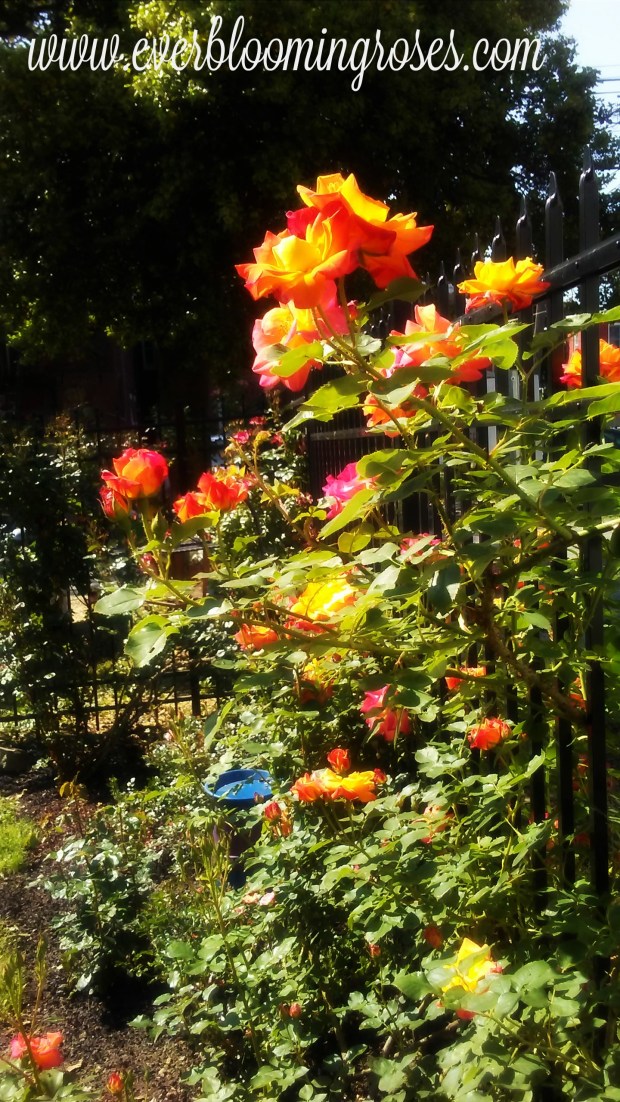
Joseph’s Coat climbing rose
After much researching and deliberation, I set out to find a specific rose of particular beauty and fragrance known as “Double Delight”. As I slowly perused the rows of selection at a local nursery, I was disappointed to not find the rose I had my heart set on. Nevertheless, I lingered about intrigued by the variety of colors and scents displayed before me. Upon walking up and down the aisles, I decided to look a little more carefully just beyond the arrangement of roses for sale. To my utmost surprise and delight, there was my desired rose hiding in a dark, forgotten corner. She was the last one left, wrapped up in bare root form, just waiting to be redeemed. Upon finding this rose known as “Double Delight” and redeeming her as my very own rose, I experienced double delight indeed!

“Double Delight” {photo credit: unknown}
Did you know, the Spirit of the Lord searches for those He desires? He long-suffers, patiently pursuing us with the desire to redeem us, heal us, transform us. He’s not afraid to reach into the dark, overlooked corner we’ve been hiding in. He sees beauty in us no other can possibly see. He longs to adopt us into His collection of fragrant roses because He knows in time, we will dispense a unique fragrance of love into a hurting city of barrenness. Once we are found and come into His kingdom, Jesus tells us in Luke 15, all of heaven rejoices over such a delightful find! If I delighted in finding such a rose, surely, He doubly delights in finding you!
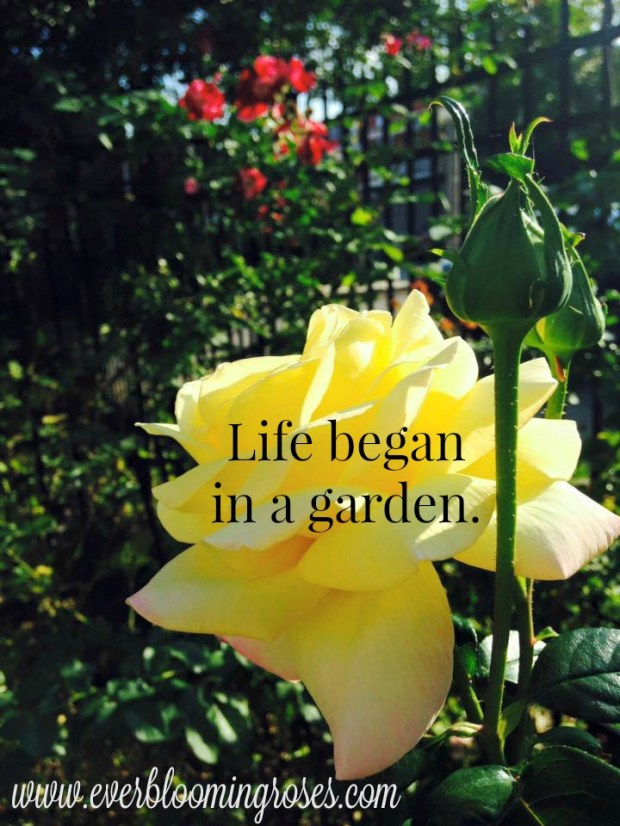
If you are a person familiar with the Bible, you probably are familiar with the concept of God being like a shepherd. Ezekiel 34 speaks to God judging between sheep, rams, and goats to see who is truly of His flock and who isn’t.
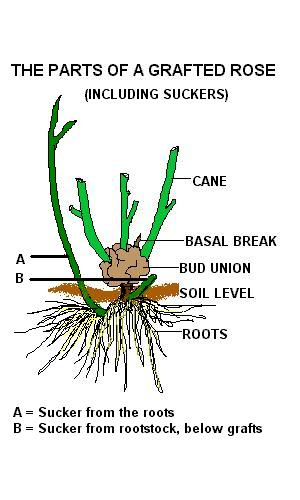
{photo credit: Hanford Rose}
Similarly, us gardeners need to discern between actual rose canes and something called “suckers”. Many rose bushes you buy at local home improvement stores and nurseries are grafted onto a hardy, vigorous root stock. If you see a knot at the base of a rose, this is called a “bud union” where the two plants are united. Once planted, below the ground is the hardy root stock. Above the ground is the bush you selected for it’s color, fragrance, disease resistance, etc. Sometimes, what’s known as a “sucker” grows up out of the ground alongside the rose bush you purchased. The sucker is a separate cane that has manifested from the root stock. The sucker often looks similar at first to the rose bush you bought – after all, it is still a rose cane. Eventually, as both the sucker and the intended rose bush develop, the gardener will realize the sucker is indeed a very different bloom than the one they bought. If one is new to rose gardening though, it would be easy to assume the sucker is in fact a normal part of the rose bush until both mature. It is then, one will clearly be able to differentiate the two just like the reapers could in the parable of the wheat and tares. Once the gardener determines the difference, the sucker must be removed.
How about you? Are you a glorious rose in God’s garden or are you a look-alike sucker that will eventually be removed?
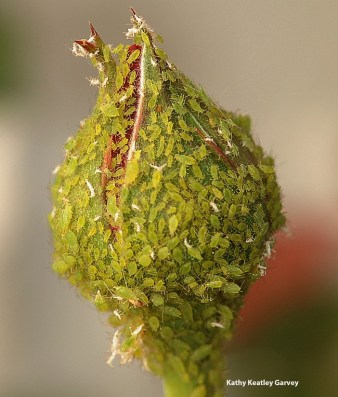
{photo credit: Kathy Keatley Garvey}
Now that it appears Spring has fully sprung, I discovered an influx of aphids enjoying my aspiring rose buds. Aphids are tiny insects that smother the tips of rose canes, foliage, and buds while sucking the life out of any given plant. Left unchecked they can damage a rose bush and therefore, prevent a hopeful bud from blooming. Aphids often camouflage with the greenery of many plants, although they can come in a variety of colors. Perplexed as to why an abnormal amount of aphids were clinging to my canes this Spring, I reached out to my local rose society for answers. Despite my roses’ healthy foliage, nutritious soil, and lack of disease, most likely the mild winter didn’t suppress the previous year’s aphid population and their eggs allowing for more to flourish this year. Thankfully, with rose gardening comes an informative community of rosarians ready to help one succeed in growing beautiful roses whether through your local rose society or online. Facebook groups offer a fun way to see blooms from all around the world while getting answers fast! Regardless if one is educated through the web, books, experience or all of the above, gardening, particularly rose gardening, requires an attitude of ever-learning!
Similarly, I have found as a rose in God’s garden, we too need an ever-learning attitude for there is always more to learn about God, His Word, and His principles. After all, it shouldn’t surprise us that there is an infinite amount to learn about an infinite God. If you aren’t growing in God, then you probably are shriveling just as the aphids do to the foliage of a rose. Perhaps now is the time to reach out to your local body of Christ, being the church, to get the answers, accountability, and the encouragement you need to thrive just as I needed to reach out to my local rose society for help.
To learn more about treating aphids and other insects commonly found in the garden, get a copy of my book Ever-Blooming During the Good, the Bad, and the Bugly.
Is your praise springing forth in this new season of Spring?
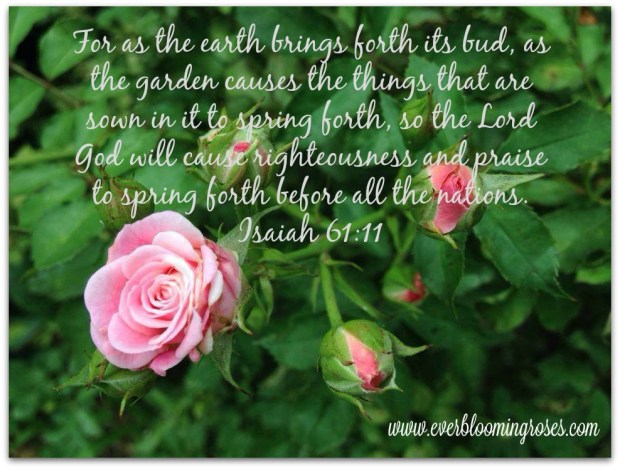

After the dormancy of winter, I welcome new life and new opportunities sprouting forth this Spring. The birds joyfully sing and the foliage of my roses burst into a song of their own. Spring has once more resurrected my garden and soul! Oh, what happy days!
While dumping potting soil into a new container one sunny and recent Spring day, I heard a distinct sound that differed from the usual twitters of my flying friends. I stopped tilling the soil to simply listen. As it’s frantic cries beckoned my curiosity, I discovered a rejected newborn kitten within the boundaries of my yard. One of the local and very pregnant alley cats frequently napped in my garden, but apparently on this particular day she moved a large piece of cardboard from our recycle bin area to make herself a temporary home to give birth in. For whatever reason, she opted to remove this tiny, gray, and feisty kitten from her nest. Hoping this little guy had just wandered away, I waited from within my home watching to see if Momma Cat would retrieve her helpless kitten. As I anxiously peered out my window, storm clouds approached threatening to drown the abandoned newborn. The drops came fast and furious while Momma Cat still refused to rescue her kin. I had no choice but to make a dash to retrieve the frightened baby. I quickly bathed it and warmed it to my chest. A few hours later, Momma Cat began putting one kitten after another outside the nest rejecting all four of her litter. I read feral mother cats are more likely to become overwhelmed, stressed, and malnourished forfeiting their parental rights in order to simply survive.

Naturally, my husband and I rescued the crying kittens.
God surely has a sense of humor because just the other day I was wishing my tubes weren’t tied. Suddenly, I have quadruplets! To my surprise and delight, these precious babies require much of the same care a human infant requires: Feeding them every couple of hours or so, burping them, wiping their tooshies before and after feedings, and many loads of laundry. I am sleep deprived and exhausted just like any mom caring for her newborn. Nevertheless, I am grateful for this resurrection season of new life and new opportunities! It’s simply purrfect!

Upon letting the roots of my newly purchased bare-root rose soak in a bucket of water and fish fertilizer for approximately 24 hours, I decided to recruit my then 11-year-old son in helping me plant it in late March (the region you are located in will determine when the best time is to plant a rose bush – typically Spring or Fall). Although willing to help me out, my son was not keen on getting his hands too dirty. After all, his hands prefer Legos and video games. Nevertheless, I figured he could use the sunshine and learn a thing or two in the process. After choosing the desired area where I wanted to plant my new rose, we saturated the ground to make the digging easier while also testing the drainage of the soil. My son and I then took a few turns plunging the shovel in the dirt till we reached approximately 18 wide by 18 inches deep. The variant of rose will dictate how much spacing is needed between plantings but on average allow for 2 – 4 feet in between rose bushes. By this point, we were ready to transplant the bare root rose from being in the bucket to its permanent home in the ground. Because the ground was reasonably muddy, I put on pink rubber gloves to protect my painted nails. Apparently, even I don’t like to get my hands too dirty!
I proceeded to create a mound of soil in the shape of a pyramid within the hole so I could rest the rose on top of the mound while sprawling its roots out as best as possible for optimal growth.  While holding the rose in one hand, or glove I should say, I used the other to pack the dirt around the roots as well as the dirt around the base of the rose till she was firmly secure. Overall, the process of planting our newly adopted rose was a success, but we sure did make a muddy mess.
Many days later, I reflect on how we as people of faith often like the beauty of our religious traditions and concepts much like we enjoy the beauty of roses or the idea of a lovely garden. However, we don’t usually like to be too inconvenienced by getting our hands dirty by volunteering or digging too deep into theological thinking. It’s far easier to be comfortable in our faith journey than to potentially be inconvenienced or challenged as we seek to serve others and ponder God’s ways, for example. More often we prefer to stand around like my son and watch others dig for God. Or if we do take the plunge, we set limits on our love by wearing gloves, so the depth of our devotion doesn’t stain our nails, alter our appearance, or even transform us. And yet, God’s great love, wisdom, and mercy seem to constantly and creatively be digging deep for us with the hopes we’d be firmly rooted in His garden.

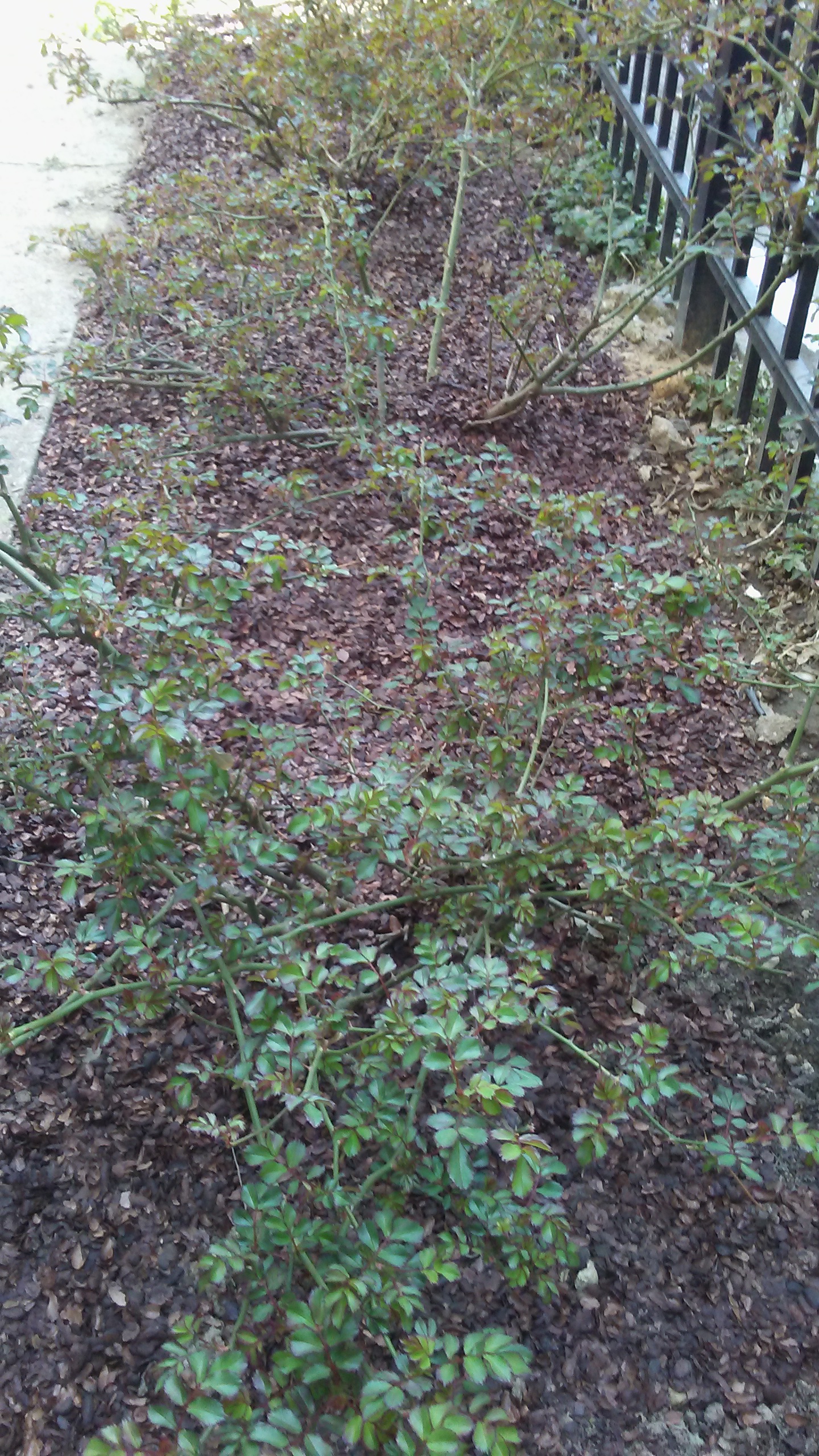
“Sweet Drift” enjoys cocoa hull mulch.
When you think of chocolate and roses, Valentine’s Day may come to mind, but did you know there is mulch that smells like chocolate? Cocoa hull mulch or cocoa shell mulch is simply the shell of the roasted cocoa bean. This economical, organic, and dark colored mulch is readily available at many nurseries in the area or online and boasts a divine smell as well as other benefits to your garden. Some benefits to this aromatic mulch is it improves the soil since it has a pH of 5.8 and puts nitrogen back into the soil, whereas rapidly decaying organic mulches reduce nitrogen level. It also helps retains moisture and cocoa hull mulch helps prevents weeds as it interlocks together when wet creating a nice barrier. In addition, it helps repel slugs, snails, termites, and some bugs.Another benefit is cocoa shell mulch gets darker as it ages not lighter like most mulches.
A word of caution though if you have small children or pets, cocoa shell mulch can cause physical illness or death if consumed in large quantities, but most animals would not be attracted to it in the first place. Nevertheless, something to consider. Another factor to be aware of when considering this mulch is a harmless mold can grow on it if over-watered or when in very humid conditions with not much air circulation. A simple solution of vinegar mixed with some water will resolve this issue though.
Personally, because of it’s smell, textures, natural resource, and benefits to my roses, I am a big fan of cocoa hull mulch! It seems everyday is Valentine’s in my garden!

