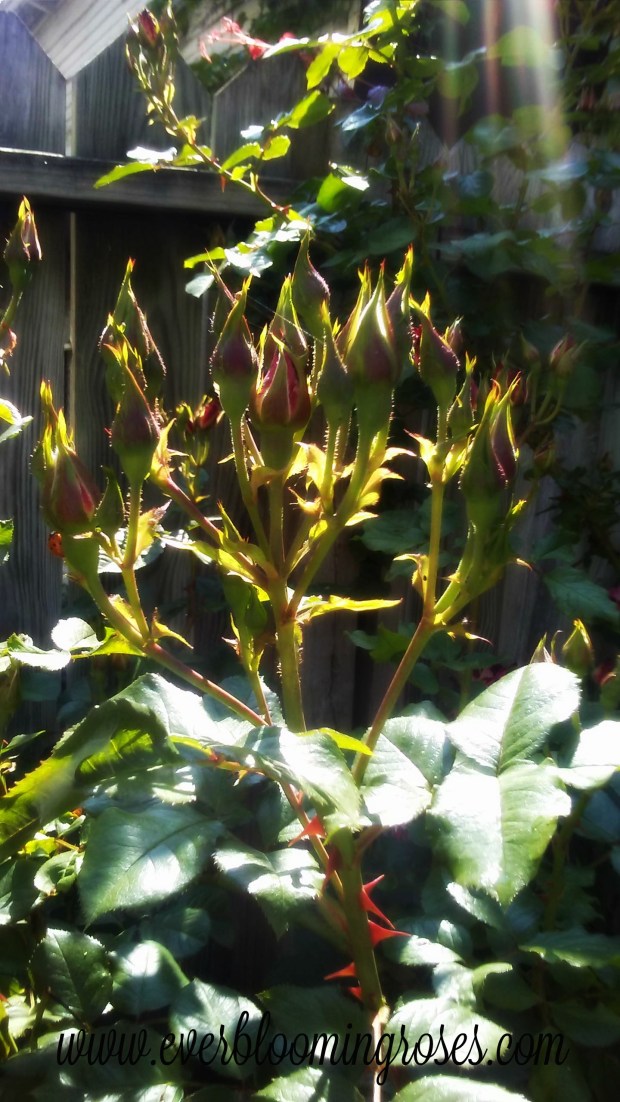
Fourth of July candelabra
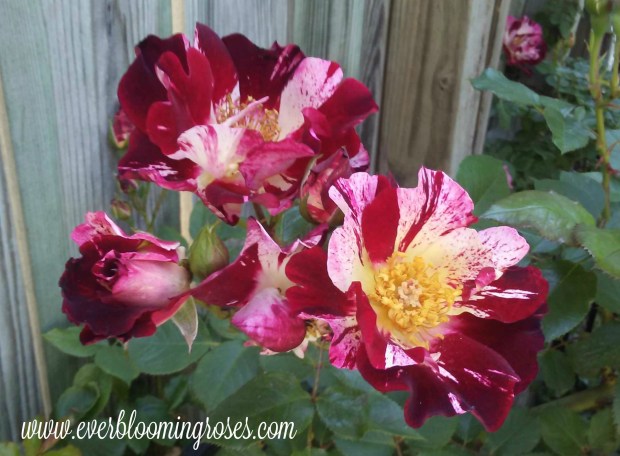
Fourth of July climbing rose
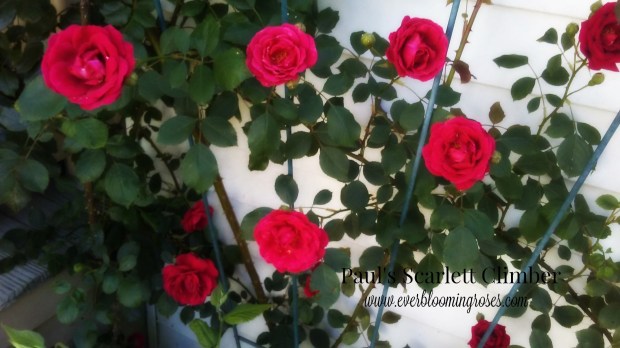
Paul’s Scarlett Climber – a once-blooming climbing rose
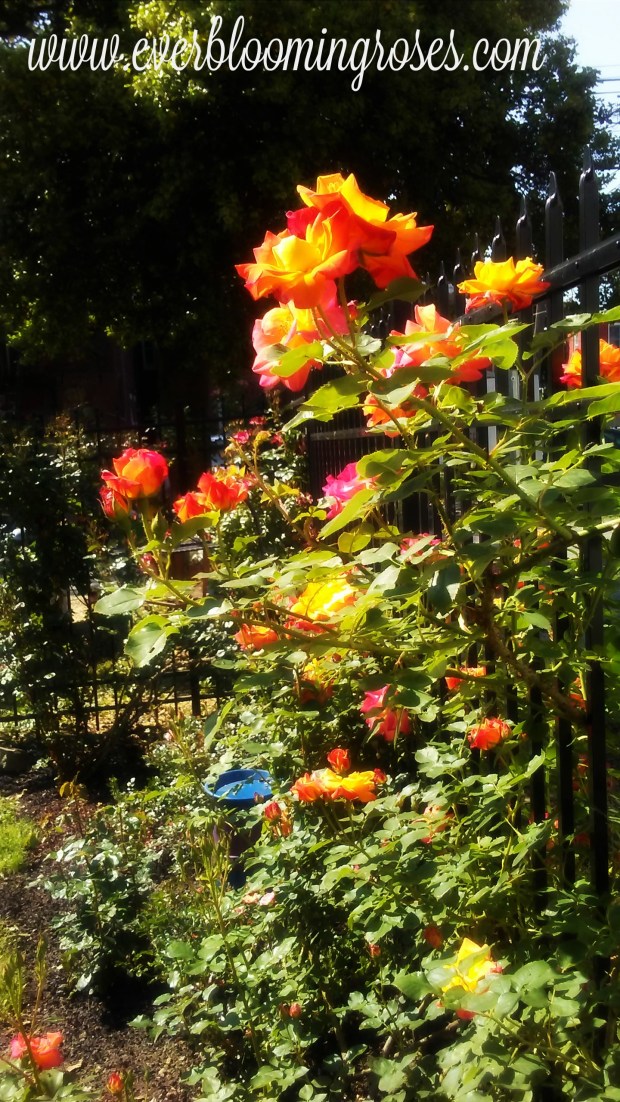
Joseph’s Coat climbing rose
Fourth of July candelabra
Fourth of July climbing rose
Paul’s Scarlett Climber – a once-blooming climbing rose
Joseph’s Coat climbing rose
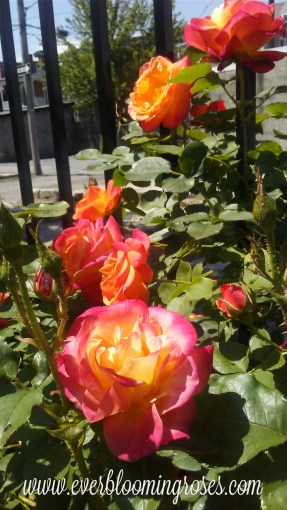
This year, I am amazed by the abundant growth, healthy foliage, and vibrant colors blossoming in my rose garden. Even roses I didn’t remember being particularly fragrant are smelling oh so nice! Normally, my yard produces pretty roses with little to no help needed thanks to some ideal soil conditions. But this year, I decided to add a bit of mushroom compost around my roses covered by a couple of inches of cocoa hull mulch. I also feed my roses a monthly treat of fish emulsion, which is a stinky brown liquid that I mix according to directions with water.
Plants need many nutrients in order to thrive, but they especially need Nitrogen, Phosphorous, and Potassium.
UP: Nitrogen (N) is responsible for visible growth up above ground and primarily produces healthy leaves. Nitrogen also helps with producing vibrant colors in blooms.
DOWN: Phosphorous (P) is concerned with what’s happening down below ground by providing strong root systems, which help transport needed food to produce more blooms and subsequent fruit.
ALL-AROUND: Potassium (K) is responsible for the all-around health of the plant so it can fend off disease, pests, and environmental stresses like extreme heat. Too much or too little of these elements can alter the health of your plant.
I’ve concluded based on how much I put down and the nutrients it boasts, cocoa hull mulch is what has made the most significant improvement to the prolific health and beauty of my roses this year. What I love about cocoa hull mulch, besides the fact that it looks and smells great, is that it puts nitrogen back into the soil whereas most mulches reduce nitrogen levels. No supplemental nitrogen is needed with this delicious smelling mulch. To be exact, cocoa hull mulch offers one’s garden 2.5% of nitrogen, 1% phosphorous, and 3% potassium. It also has a neutral pH of 5.8, which is perfect for roses. Overall, I am extraordinarily pleased by the up, down, and all around results of cocoa hull mulch as it provides healthy nutrients for my rose garden.
This noticeable difference made me contemplate the importance of feeding our soul with proper nutrition. In doing so, we’ll be firmly rooted in our faith producing lives full of healing foliage along with vibrant fruit such as obedience, love, and peace, all the while being able to fend off diseases like offense and temptation. I once heard someone say if you aren’t growing in God, then you are shrinking. In order to be an up-down-all around thriving rose in God’s garden, consider supplying the soil of your soul with abundant nutrition.
After much researching and deliberation, I set out to find a specific rose of particular beauty and fragrance known as “Double Delight”. As I slowly perused the rows of selection at a local nursery, I was disappointed to not find the rose I had my heart set on. Nevertheless, I lingered about intrigued by the variety of colors and scents displayed before me. Upon walking up and down the aisles, I decided to look a little more carefully just beyond the arrangement of roses for sale. To my utmost surprise and delight, there was my desired rose hiding in a dark, forgotten corner. She was the last one left, wrapped up in bare root form, just waiting to be redeemed. Upon finding this rose known as “Double Delight” and redeeming her as my very own rose, I experienced double delight indeed!
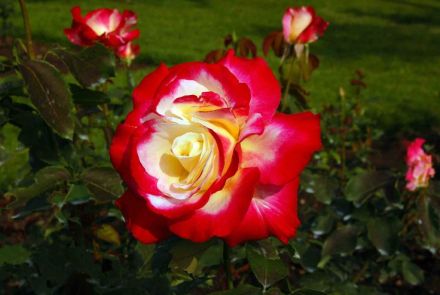
“Double Delight” {photo credit: unknown}
Did you know, the Spirit of the Lord searches for those He desires? He long-suffers, patiently pursuing us with the desire to redeem us, heal us, transform us. He’s not afraid to reach into the dark, overlooked corner we’ve been hiding in. He sees beauty in us no other can possibly see. He longs to adopt us into His collection of fragrant roses because He knows in time, we will dispense a unique fragrance of love into a hurting city of barrenness. Once we are found and come into His kingdom, Jesus tells us in Luke 15, all of heaven rejoices over such a delightful find! If I delighted in finding such a rose, surely, He doubly delights in finding you!
The Encouragement of Light – http://wp.me/pqWYg-5HQ

If you are a person familiar with the Bible, you probably are familiar with the concept of God being like a shepherd. Ezekiel 34 speaks to God judging between sheep, rams, and goats to see who is truly of His flock and who isn’t.
{photo credit: Hanford Rose}
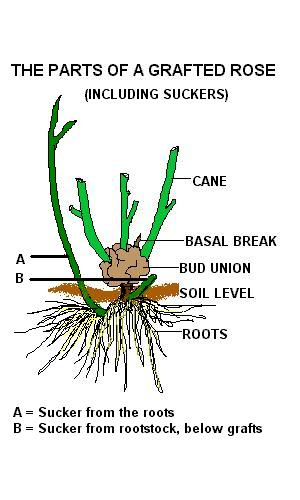
Similarly, us gardeners need to discern between actual rose canes and something called “suckers”. Many rose bushes you buy at local home improvement stores and nurseries are grafted onto a hardy, vigorous root stock. If you see a knot at the base of a rose, this is called a “bud union” where the two plants are united. Once planted, below the ground is the hardy root stock. Above the ground is the bush you selected for it’s color, fragrance, disease resistance, etc. Sometimes, what’s known as a “sucker” grows up out of the ground alongside the rose bush you purchased. The sucker is a separate cane that has manifested from the root stock. The sucker often looks similar at first to the rose bush you bought – after all, it is still a rose cane. Eventually, as both the sucker and the intended rose bush develop, the gardener will realize the sucker is indeed a very different bloom than the one they bought. If one is new to rose gardening though, it would be easy to assume the sucker is in fact a normal part of the rose bush until both mature. It is then, one will clearly be able to differentiate the two just like the reapers could in the parable of the wheat and tares. Once the gardener determines the difference, the sucker must be removed.
How about you? Are you a glorious rose in God’s garden or are you a look-alike sucker that will eventually be removed?
{photo credit: Kathy Keatley Garvey}
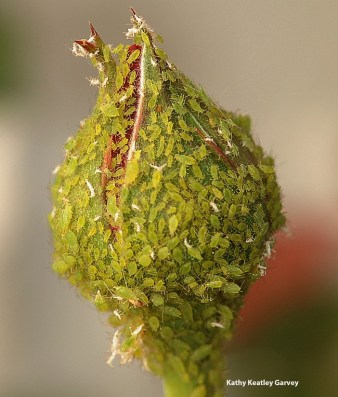
Now that it appears Spring has fully sprung, I discovered an influx of aphids enjoying my aspiring rose buds. Aphids are tiny insects that smother the tips of rose canes, foliage, and buds while sucking the life out of any given plant. Left unchecked they can damage a rose bush and therefore, prevent a hopeful bud from blooming. Aphids often camouflage with the greenery of many plants, although they can come in a variety of colors. Perplexed as to why an abnormal amount of aphids were clinging to my canes this Spring, I reached out to my local rose society for answers. Despite my roses’ healthy foliage, nutritious soil, and lack of disease, most likely the mild winter didn’t suppress the previous year’s aphid population and their eggs allowing for more to flourish this year. Thankfully, with rose gardening comes an informative community of rosarians ready to help one succeed in growing beautiful roses whether through your local rose society or online. Facebook groups offer a fun way to see blooms from all around the world while getting answers fast! Regardless if one is educated through the web, books, experience or all of the above, gardening, particularly rose gardening, requires an attitude of ever-learning!
Similarly, I have found as a rose in God’s garden, we too need an ever-learning attitude for there is always more to learn about God, His Word, and His principles. After all, it shouldn’t surprise us that there is an infinite amount to learn about an infinite God. If you aren’t growing in God, then you probably are shriveling just as the aphids do to the foliage of a rose. Perhaps now is the time to reach out to your local body of Christ, being the church, to get the answers, accountability, and the encouragement you need to thrive just as I needed to reach out to my local rose society for help.
To learn more about treating aphids and other insects commonly found in the garden, get a copy of my book Ever-Blooming During the Good, the Bad, and the Bugly.

Sweet Peas grow up to around 6 feet tall with a variety of colors! {photo credit: unknown}
If you ever want to experience joy while refining your level of patience, then nurturing tiny seeds into seedlings and eventual full grown veggies or other blooms is a process to trust. For the past several weeks, I’ve watched Sweet Peas evolve from tiny round seeds to long slender stems with several small leaves. Around the time they were ready to be transitioned to the great outdoors, our area experienced an ongoing winter-like cold snap that lasted for a couple of weeks preventing me from transplanting them where they could reach their full potential. Meanwhile, my Sweet Peas were getting so tall they were flopping over and their roots were attempting to break forth from the seedling cell pack I originally started them in.
 As I impatiently waited on the Lord to intervene in our wacky weather, He softly spoke to me about how the conditions weren’t right for the seedlings to flourish or put another way, the seedlings weren’t ready for the demands of the external conditions. Much like we, as baby believers, may grow suddenly and are eager to get out there to lead or teach, but often we simply aren’t ready for the conditions we will have to endure. Just as there is a “hardening off” process where I have to slowly introduce the seedlings to the ideal external conditions by placing them outdoors for a few minutes a day for several days until they are ready to be permanently exposed to the outdoor environment, people of faith need to be raised up and gently prepared prior to blessing their surrounding environment with fragrant blooms or refreshing fruit. Otherwise, the chilly nights, scorching sun, or unexpected storms will quickly snuff out our enthusiastic seedling forever ruining the patient process of producing anything substantial or eternal.

Sweet Peas bouquets {photo credit: Floret Flowers}
With everything, there is a process – a process we must learn to trust. If you are willing to display the fruits of God’s Holy Spirit, if you are willing to dispense the sweet aromas of God, if you are willing to be overcoming and ever-blooming for Him, then you have to first be willing to go through the process of growing up in God until the conditions in your heart and surrounding circumstances are ready and able to bear fruit. Be encouraged and diligent though as your roots deepen and stems thicken for a time will come when He will transplant you providing you with ample opportunity to manifest His glorious blooms securely planted in Him!
For step by step directions on how to grow Sweet Peas from seed, check out this helpful article by Floret Flowers.
Is your praise springing forth in this new season of Spring?